
Brain Rot or Brilliant? (The Rise of Unhinged Brand Marketing)
Advertising Used to Sell. Now It Wants Attention.
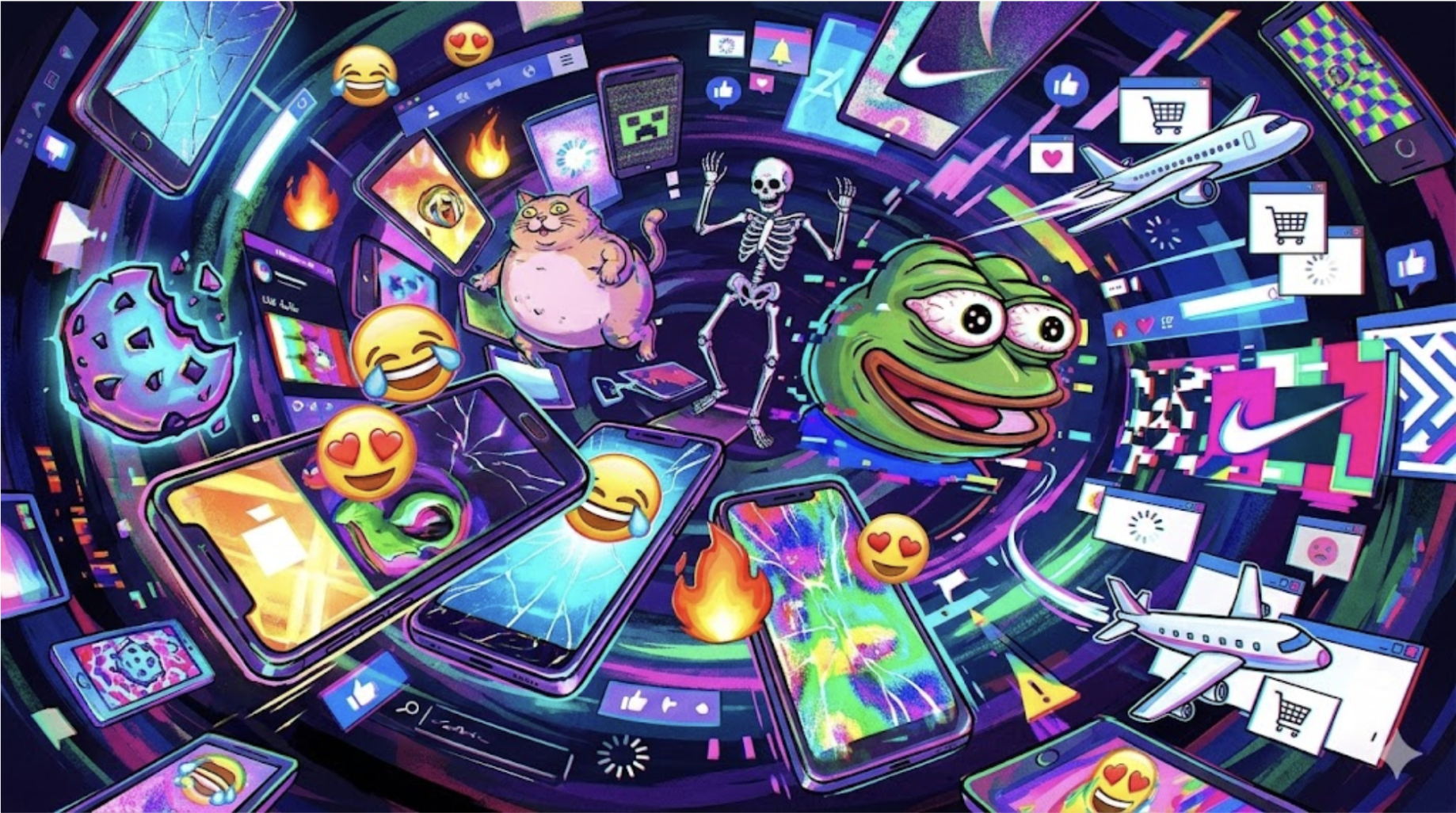
Photo Courtesy of Google Gemini
Every advertisement is created to sell. Or at least they used to.
You’d see commercials on TV, ads on billboards in Times Square, or glossy print ads, all doing one job: promote the brand and spike the sales. Now, brands are veering toward something totally different. They’re trying to not only sell, but get noticed. To feel relevant. To showcase personality.
In today’s marketing landscape, the best way to do that is to match the mindset of your audience, which in many cases, means Gen Z and Gen Alpha.
That means tapping into the brain of someone who grew up chronically online.
I’m 25. Being born in 2000 means I witnessed the rise of the internet in real time, but I like to think it didn’t fully consume my thought process or “rot” my brain. I have a degree in journalism. I wrote before ChatGPT could help me form a thought. I minored in creative writing, which means I spent four years crafting poems and short stories with nothing but peer workshops and professor feedback. That shaped my writing structure, my tone, and my way of thinking.
But that style of communication doesn’t always land with the younger end of Gen Z or the older side of Gen Alpha. They don’t necessarily care about nostalgia. They don’t respond to traditional brand storytelling. Their attention spans demand something louder, faster, and more absurd.
Something we call brain rot.
What Even Is Brain Rot?
Brain rot is the feeling that your brain is slowly melting from consuming too much low-quality, addictive internet content. It’s being so glued to chaotic memes, short-form videos, and nonsense humor that it feels like your attention span and your cognitive functions are taking a hit.
And brands? They’ve started leaning into this.
A few companies have shifted to trade that corporate polish for what sounds like messages in a group chat. But the catch is, this only works if the absurdity aligns with the brand.
Turning Backlash into Brand Equity: Ryanair
Take Ryanair, for example.
Ryanair is a budget airline known for cheap flights, extra fees, and questionable amounts of legroom. Instead of defending their brand, they leaned into it. Their voice is petty and painfully self-aware. When someone tweets about the airline’s tiny seats or poor baggage fees, Ryanair replies with something like, “It’s because you only paid $17 for this flight.”
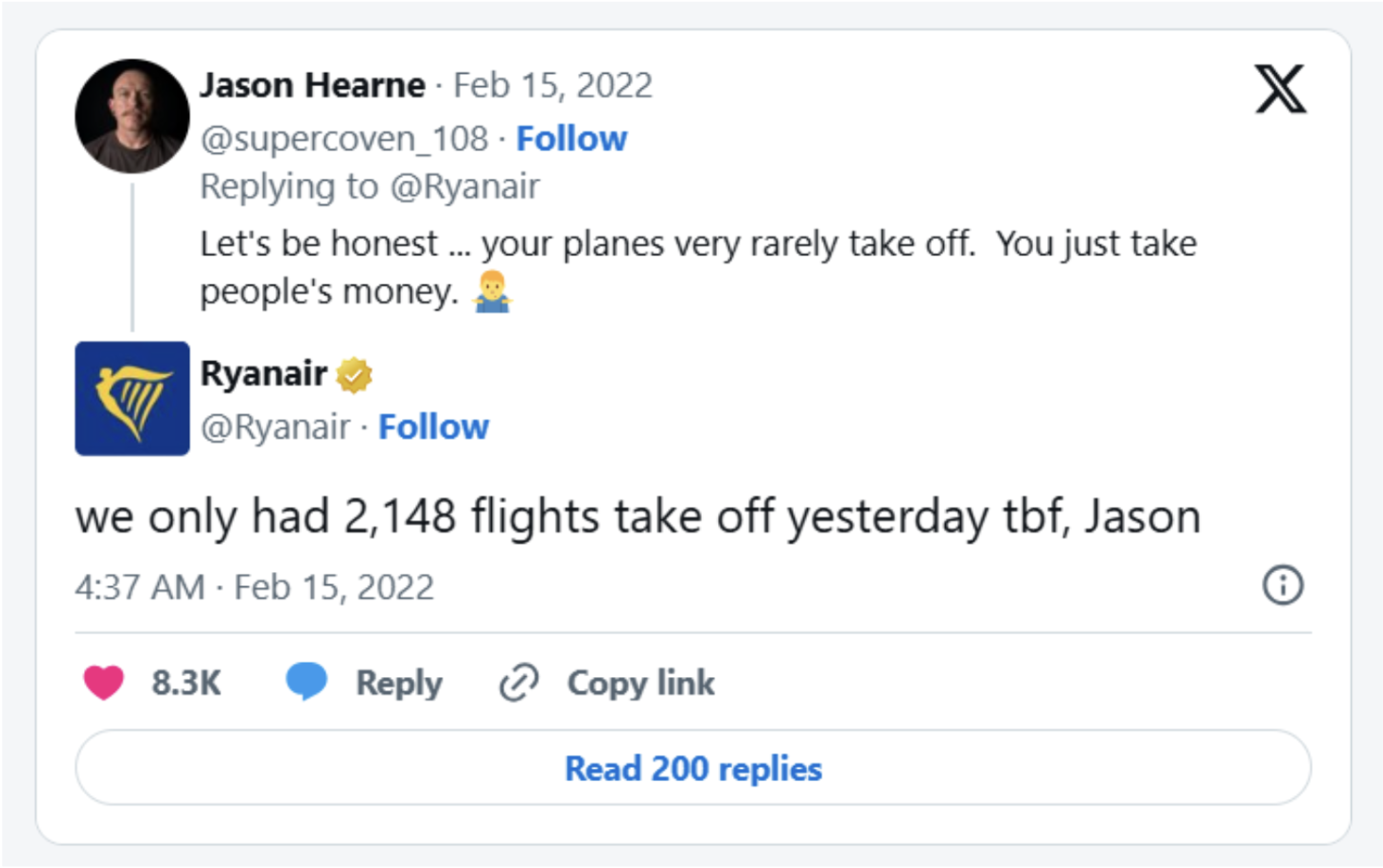
Photo courtesy of Ryanair's Hilarious, Rude, Savage Twitter Team - One Mile at a Time
They turn those complaints into context.
And humor, which is arguably the most underutilized tool in advertising, becomes strategic positioning. If you’re booking on a budget, Ryanair has already set your expectations low in a way that feels socially acceptable. Their TikToks are low-quality, fast, loud, slightly nonsensical, all the elements of brain-rot culture. Whoever is running their TikTok account, definitely needs a raise.
But it works because it aligns with their value proposition.
The Owl That Threatened Us Into Fluency: Duolingo
Next on our list is Duolingo.
Duolingo pivoted from a cute, educational mascot to an unhinged internet menace. I use Duolingo, and I’ll admit, the intense, all-caps “threats” I receive from their owl kept my streak alive for an entire year.
That tone was the strategy.
They post absurd content about the owl’s “personal life.” They killed it off just for engagement. There is zero seriousness in the brand’s voice, and it works because of who their audience is. Their users skew young and online. Plus, the app is playful and gamified.
They turned those reminders to study into a running internet joke. That’s not brain rot for the sake of brain rot; that’s behavioral reinforcement centered around humor.
Now, let’s provide an example of a brand that solely hopped on the brainrot trend and took it to another level.
I’m talking about Nutter Butter.
The Cookie I See In My Nightmares: Nutter Butter
Watching their short-film TikTok content feels like a fever dream. There are distorted filters, ominous music, horrific grammar errors, and random snippets that don’t make any logical sense. The cookie is glitching half the time. There is zero product messaging, no explanation as to why you should buy it, or even what it tastes like. Their TikTok account proves it.
It almost feels uncomfortable to watch.
From a traditional marketing standpoint, this feels wrong.
But here’s where it gets complicated.
I think about their TikTok page almost daily, mostly because I’m praying it doesn’t show up on my “For You” page.
Today, memorability is currency. Nutter Butter broke their category’s norms. They created intense intrigue. They sparked conversation threads dissecting their “lore.”
You don’t crave cookies.
But you remember the brand.
Unlike Ryanair and Duolingo, Nutter Butter’s chaos doesn’t clearly ladder back to a brand truth. Ryanair reinforces “cheap and self-aware.” Duolingo reinforces “playful habits.” Nutter Butter feels all over the place and is not intentional in the slightest.
And yet - it lingers.
That’s either terrible marketing or it’s terrifyingly effective.
If Nutter Butter is what happens when brands fully surrender to the trend, Liquid Death is what happens when you command it.
Psychology of Skepticism: Why Trust is the New Price Tag
As Gen Z has the biggest “ad radar” in the world, they are the driving force behind the viral "#TikTokMadeMeBuyIt" phenomenon.
The Medium reports that over 70% of GenZers prefer brands that "entertain or educate" them rather than just promote a product. This explains the paradox. They skip the pre-roll ad because it interrupts their entertainment, but they buy the Stanley Cup because it is the entertainment.
They don’t hate buying; they hate being sold to.
Discipline Disguised in the Chaos: Liquid Death
I recently attended Laugh Your Ads Off in Boston, an advertising event where Andy Pearson, CCO of Liquid Death, spoke about their creative strategy. Their marketing feels a bit outrageous, but it is never necessarily random. Every joke ladders back to the brand. It’s rebellious, anti-corporate, over-the-top, but clear.
That’s the difference.
Where Nutter Butter feels chaotic for chaos’ sake, Liquid Death feels more disciplined in sending its brand messaging. The humor isn’t implemented only for attention; it’s there to reinforce brand identity.
Like Ryanair and Duolingo, they understand their audience. The unhinged tone works not only because it’s loud and out there, but because it’s aligned.
And that’s the real distinction.
Where Brain Rot Doesn’t Belong
Brainrot works in low-risk categories. It struggles in high-trust ones.
Imagine Chanel posting distorted meme edits. Or a bank responding to fraud complaints with sarcasm.
It wouldn’t feel clever. It would feel careless.
So… Brain Rot or Strategic?
Leaning into brain rot isn’t automatically genius. In many cases, it’s risky. But when brands understand their voice, their audience, and their category, even absurdity can be strategic. In the attention economy, the question isn’t whether you look unhinged. It’s whether the unhinged behavior makes sense.
-Kelsey Klungel