
Why GenZ Hates Ads and Still Buys What TikTok Sells
Gen Z has rejected the interruptive "hard sell" of traditional advertising in favor of an authentic, entertainment-first model where trust is earned through vulnerability, not perfection.
Photo Courtesy of Shutterstock /SomYuZu
Is a viral TikTok now superior to traditional advertising? The November 2023 Stanley tumbler incident suggests it might be.
When a user posted a video of their Stanley Cup surviving a car fire, it provided accidental, irrefutable proof of the product’s durability: something a scripted ad struggles to replicate.

Photo courtesy of @danimarielettering
The brand bypassed traditional PR channels entirely. Rather than a press release, the Stanley President used TikTok to offer the user a replacement car. This unscripted, 14-second interaction demonstrated that organic, user-generated content often holds more weight than a curated campaign.
Gen Z has rejected the "interruptive" model of traditional advertising in favor of an "integrative" model based on social proof and entertainment.
As Gen Z has the biggest “ad radar” in the world, they are the driving force behind the viral "#TikTokMadeMeBuyIt" phenomenon.
The Medium reports that over 70% of GenZers prefer brands that "entertain or educate" them rather than just promote a product. This explains the paradox. They skip the pre-roll ad because it interrupts their entertainment, but they buy the Stanley Cup because it is the entertainment.
They don’t hate buying; they hate being sold to.
Psychology of Skepticism: Why Trust is the New Price Tag
To understand why a burnt car sells more cups than a million-dollar ad campaign, we have to look beyond short attention spans. We have to look at the "trust deficit."
According to a recent McKinsey & Company report, public faith in brands has hit historic lows. For Gen Z, this skepticism isn’t just a mood; it’s a shopping habit. The report notes that digital natives now weigh "digital trust" just as heavily as price when making a purchase.
Think about that shift. For decades, the marketing equation was simple: Price + Quality = Sale.
Today, the equation has changed: Price + Trust = Sale.
If the trust variable is zero, the low price is irrelevant. This helps explain why the traditional, high-gloss commercial often backfires. As Alison Taylor, a clinical associate professor cited in the report, explains, the old playbook of sharing "sunny stories about all the wonderful things companies are doing" no longer works; it just breeds suspicion. GenZ prefers brands that are "honest and focused about the challenges and the limitations" of what they do.
A polished TV spot presents a "sunny story": a world without flaws that GenZ knows doesn’t exist. A TikTok of a car fire, however, is a story about a challenge. It is messy, destructive, and imperfect, but because it acknowledges the reality of the disaster, the survival of the cup feels real.
In the eyes of Gen Z, perfection is a red flag. Vulnerability is the only currency that buys trust.
The Authenticity Shift: Why "Lo-Fi" Sells
If vulnerability is the currency of trust, then "lo-fi" is the new gold standard.
For decades, brands operated on the belief that authority looked like a cinema camera, a script, and a celebrity endorsement. But for a generation raised on the internet, high production value often signals a cover-up. It creates distance.
Gen Z has dismantled the traditional hierarchy of influence. They don’t want to hear from the expert in the lab coat; they want to hear from the girl in the bathroom who is actually using the product.
This is the rise of User-Generated Content (UGC) as the ultimate commercial. When a creator records a video in their messy bedroom, stuttering over their words or showing a breakout on their skin, it signals "no budget." And to the Gen Z mind, No Budget = No Agenda.
This shift is driven by two psychological factors:
Peer Validation: We trust "someone like us" more than someone above us. A celebrity endorsement feels like a transaction; a review from a peer feels like a recommendation.
Parasocial Relationships: Social media blurs the line between "creator" and "friend." When a favorite TikToker recommends a moisturizer, it doesn’t trigger the “Ad Radar” because it feels less like a sales pitch and more like a FaceTime call.
This is why the most effective marketing today looks "casual" or “ugly” even, by traditional standards. Shaky camera work, bad lighting, and unscripted chaos are no longer mistakes. They are markers of authenticity. They prove that the content (and the product) can stand on its own without the crutch of special effects.
The New Playbook: Three Archetypes of Success
If the "hard sell" is dead, what replaces it? We can see the answer in three brands that stopped acting like corporations and started acting like creators.
1. The Accidental Hero: Stanley 1913
While the car fire video was the spark, Stanley’s brilliance was in how they fanned the flames. For a century, they were a blue-collar brand making green thermoses for workmen, pulling in roughly $70 million a year. But when the viral moment hit, they didn’t issue a press release; they pivoted to "drop culture."
By releasing limited-edition colors and leaning into the scarcity model usually reserved for Nike sneakers, they turned a $45 cup into a status symbol. The financial impact was seismic. According to data reviewed by CNBC, Stanley’s annual revenue skyrocketed from approximately $70 million to over $750 million in just four years. They understood that the car fire proved the quality, but the community wanted exclusivity.
2. The Unhinged Friend: Duolingo
Language learning is inherently boring. Duolingo solved this by abandoning its "brand guidelines" for total chaos. They transformed their mascot, Duo the Owl, from a helpful teacher into a passive-aggressive, twerking agent of chaos who “stalks” users who miss their lessons.
This wasn’t just for laughs; it was a retention engine. Reports from Duolingo’s Q1 2023 Shareholder Letter indicate that this strategy contributed to a massive 62% year-over-year jump in Daily Active Users (DAU). By jumping on trends involving Dua Lipa or Barbie within hours, they made the app culturally unavoidable. The lesson is that personality beats professionalism. Gen Z will forgive a "cringe" joke, but they won’t forgive a boring one.

Photo courtesy of Duolingo
3. The Mastermind: CeraVe
CeraVe is a clinical, dermatologist-recommended brand, historically the opposite of "cool." Instead of trying to be trendy, they leaned into the absurd. During the 2024 CeraVe Super Bowl commercial, they engineered an internet conspiracy theory that actor Michael Cera was the secret founder of the company (Michael Cera... CeraVe).
They planted rumors with influencers and let Reddit theories run wild before culminating the joke in a 2024 Super Bowl ad. According to Lion Daily News, the agency behind the campaign, the stunt generated a staggering 32 billion earned impressions. It worked because it didn’t treat Gen Z as consumers to be lectured on ingredients; it treated them as an audience to be entertained by a massive, immersive prank.
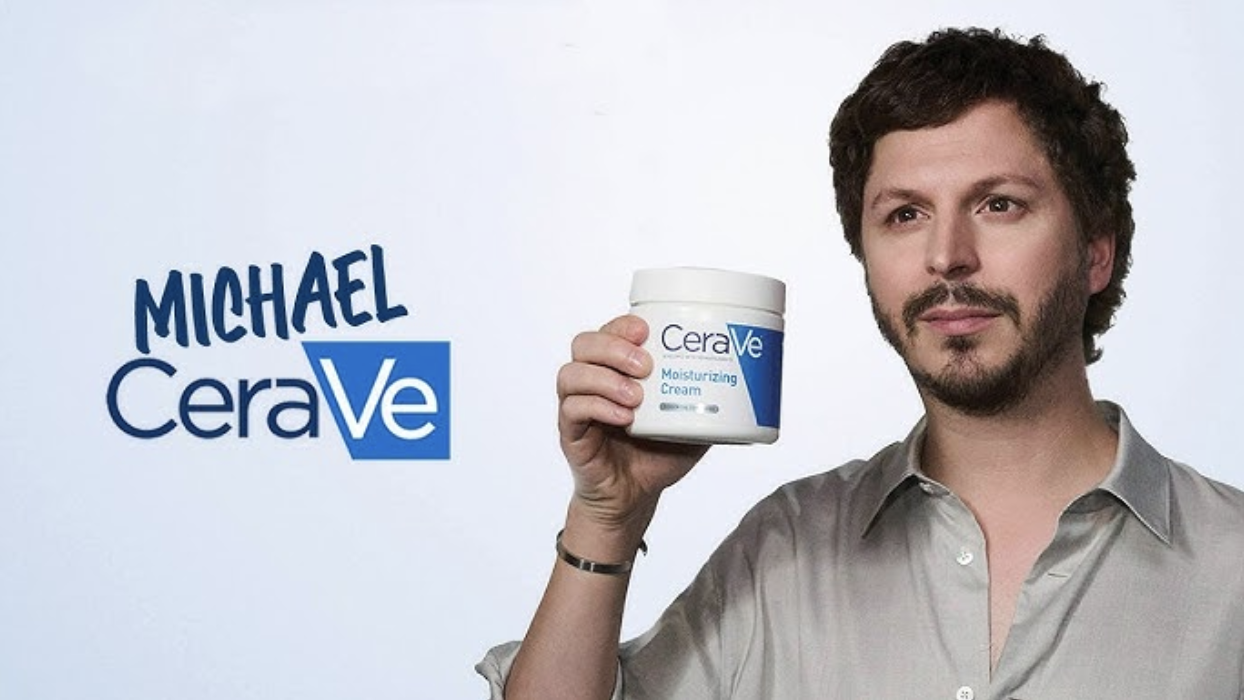
Photo courtesy of Ogilvy
The Mechanics of "TikTok Made Me Buy It"
It is not just psychology that drives these sales; it is machinery. The engine powering these trends is TikTok’s "For You" Page (FYP), which has fundamentally changed how we discover products.
To understand the shift, compare it to Amazon. Amazon is a search engine; you go there when you already know what you want (e.g., "AA batteries"). TikTok is a discovery engine. You open the app to be entertained, and the algorithm predicts what you want before you know you want it.
This solves the "Paradox of Choice." In a world where we are paralyzed by having 50 different options for a face cream, TikTok serves you one specific option, validated by a "real person" (creator), directly on your screen. It removes the friction of decision-making.
This machinery is fueled by viral velocity. On traditional social media, trends took months to build. On TikTok, "micro-trends" rise and fall in weeks or even days. This speed creates intense FOMO (Fear Of Missing Out). When a product like the Stanley Cup or a specific book starts trending, participating in the purchase feels like participating in a cultural moment. If you wait a week, the moment—and the stock—might be gone.
The Bottom: The End of the "Hard Sell"
The era of the "hard sell" is over. The paradox of Gen Z consumerism—that they block ads yet buy products at viral speeds—isn’t a contradiction; it’s a shift.
They haven’t stopped buying; they have simply stopped listening to lectures. As the Stanley, Duolingo, and CeraVe examples prove, the brands winning today aren’t the ones with the loudest commercials; they are the ones that stopped interrupting the conversation and started participating in it.
For marketers, the mandate is clear. You can no longer buy your way into the cultural zeitgeist with a big budget and a shiny 30-second spot. In the economy of the "For You" page, influence isn’t purchased; it is earned through relevance. To survive this shift, brands must abandon the pursuit of perfection and embrace the messy, chaotic, and authentic reality of their audience.
The best ad of the future won’t look like an ad at all. It will look like a story.
-Emily Cao