
Product Placement Isn’t Dead—It’s Just in Your Favorite Netflix Show
How streaming media forced advertising to evolve from interruption into un-skippable storytelling.
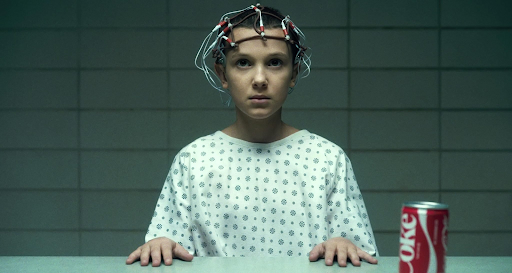
Photo courtesy of Netflix
Has Product Placement Always Been Like This?
To simply answer, no.
The advertising world is constantly faced with a simple problem: how to reach an audience that is literally paying to avoid you.
In the past, traditional advertising was more concerned with passive visibility, caring only about whether consumers would see the brand logo, not why it was there. You know the classic scene: a character awkwardly holds a product, angling the logo perfectly toward the camera for just a second too long. It felt forced, the product looked out of place, and the audience’s eyes rolled in unison. Everyone knew it was a clunky, paid partnership. Over time, viewers got fed up, so brands had to get more sophisticated with their ads.
Why The Shift?
It occurred because traditional ad breaks were no longer effective at reaching consumers.
Once the "Golden Age of TV" arrived, audiences were hooked, and they refused to have them interrupted by a car commercial. Eventually, the fast-forward button on the DVR became the original "Skip Ad."
It wasn't a small trend, either. The Guardian reported that 90% of households with digital recorders were actively using them to skip commercials.
So, What's the New Playbook?
If You Can’t Beat 'Em, Join 'Em. Since the audience is going to skip any ad that interrupts the story, the solution is to become the story. This has evolved into a few different models. The first is narrative integration.
Let’s go back to our Stranger Things reference.
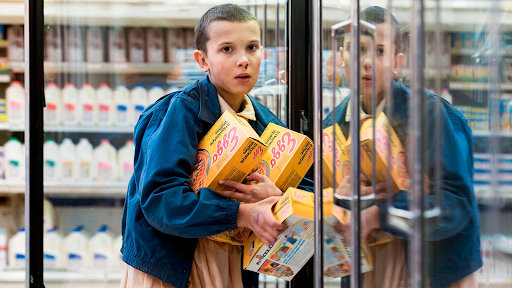
Photo courtesy of Netflix
Stranger Things takes place in the early 1980s, in an era when Eggo waffles were dominating breakfast tables everywhere. For viewers watching the supernatural show in 2016, a whole new generation discovered what it meant to “L’Eggo My Eggo” and ate up every second of it on and off the series. And they weren’t alone either, as Kellogg’s fed the fan frenzy with a throwback Eggo commercial in the Super Bowl LI that quickly dissolved into a teaser spot for Stranger Things 2.
This is narrative integration, a product placement strategy where brands are woven into the storyline of a media project, making them feel authentic rather than intrusive. But the evolution didn’t stop at nostalgia. It got smarter.
The "Aspirational" Integration: The Emily in Paris Effect
If Stranger Things is about looking back, Emily in Paris is about buying into the now. This represents a shift from "prop" to "subject."
In Season 3, the product placement wasn't just a background detail; it was the plot itself. The main character, a marketer, spends an entire episode pitching a campaign for the McDonald’s "McBaguette." The show didn’t just feature the product; it acted as a 30-minute commercial explaining why the product was chic, desirable, and delicious.
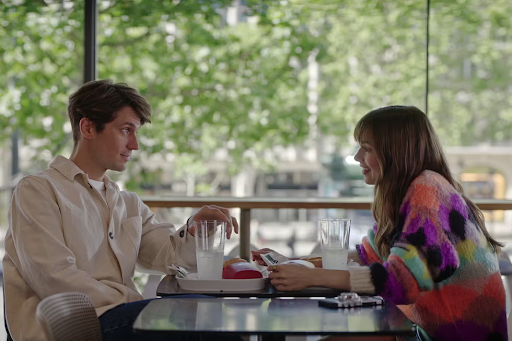
Photo courtesy of Netflix
The result? It wasn’t just a fictional win for Emily. In the real world, McDonald’s France saw a reported 25% surge in McBaguette sales. The audience didn’t skip the ad because they were too busy rooting for the character who was making it.
The "Ghost" in the Machine: Virtual Product Placement (VPP)
This is where things get a little sci-fi. What happens if a brand wants to be in a show after it’s already been filmed?
Here comes Virtual Product Placement.
Streamers like Amazon Prime Video and Peacock are utilizing AI-driven technology to insert brands into scenes in post-production. The New York Times reported that this technology has advanced rapidly, with AI startups now using "generative fusion" to insert photorealistic 3D objects like a soda can or a shampoo bottle that obey the laws of physics, casting shadows and reflecting light as if they were physically on set.
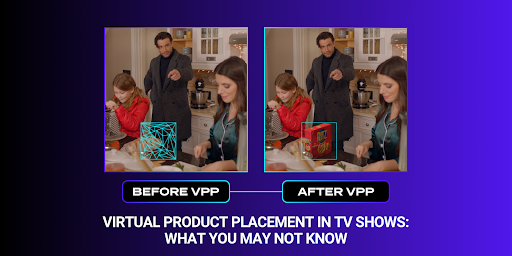
Photo courtesy of Mirriad
Picture this: a character in a crime drama walks past a blank billboard. In the U.S., a viewer sees a digital ad for a Ford truck on that billboard. In the UK, a viewer watching the exact same scene sees a Heineken ad.
This is the "Photoshop of video." As The New York Times noted, this capability allows content owners to monetize their back catalogs by retroactively inserting products into old footage. It’s seamless, data-driven, and entirely un-skippable.
The New Metric: From "Views" to "Vibes"
So, how do brands know it’s working if they can’t count clicks? They measure the cultural ripple effect.
In this new world, success isn't calculated by passive Nielsen ratings. It's tracked through active engagement, specifically search volume and social sentiment, turning the audience into active participants. When Lucas Sinclair passionately defended the controversial 1985 recipe in Stranger Things, viewers didn't just watch the debate. Instead of ignoring a commercial break, viewers pulled out their phones to Google "New Coke" or created TikToks about the McBaguette. Brands are now chasing share of culture rather than just word of mouth.
When Stranger Things integrated "New Coke," the goal wasn't just brand awareness (everyone already knows Coca-Cola); it was about brand affinity. They were borrowing the show's "cool factor" to turn a historical product into a retro-chic badge of honor.
A 30-second ad buys you attention for a moment, but a perfect integration earns you relevance that lasts.
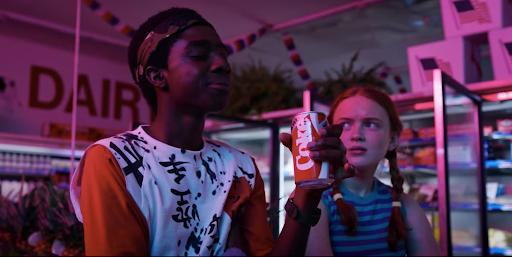
Photo courtesy of Netflix
The Bottom Line
We haven't entered a post-advertising world, but we've entered a post-interruption world.
Viewers have made a clear deal with content creators: "We will watch your ads, but only if they don't waste our time." We’ve traded the commercial break for the branded prop.
And honestly? If it means Eleven gets her waffles and we get to skip the car insurance commercials, it’s a price we’re seemingly happy to pay.
-Emily Cao-