

How TikTok Turned Scrolling Into Shopping – Short-Form Video Converts Views Into Sales
Short-form video content is driving sales, and micro-trends are hijacking our wallets.

Image Source: Alexander Shatov on Unsplash.
Have you ever opened TikTok and not realized you were watching an ad right off the bat? It’s diabolical; one second you’re scrolling for some laughs, and the next, there’s a video promoting random Swedish candy, a koi fish bath rug, or my personal favorite, a mini blender. Yet, somehow, each of these items are oddly relevant to your life.
I used to think TikTok was harmless in terms of my spending habits. I thought I was immune to the subtle product placements in 'a day in my life' vlogs or 'get ready with me' routines. It was just me, late at night, watching influencers vent about a rough day, meal prep for the week, or Canva tutorials. Then, one day, I blinked and a sourdough starter kit was on its way to my house. I have never baked bread. Not once.
That’s the power of TikTok’s newest trick: it doesn’t just sell you products; it sells you potential versions of yourself. One scroll, and suddenly you’re the kind of person who journals out all your issues, drinks chlorophyll water, and crochets new sweaters or hats for your friends. The algorithm whispers, “This could be you,” and your credit card says, “Okay, sure.”
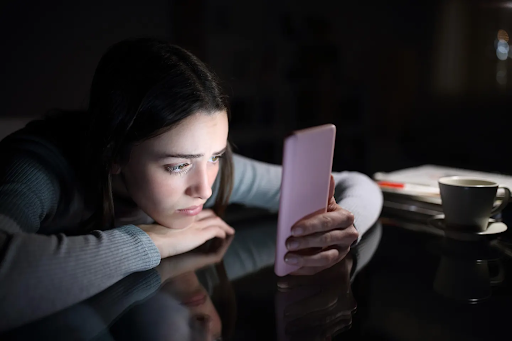
Image source: Brandon, John. “TikTok Launches Auto Scrolling. Will It Replace Doomscrolling?” Forbes, January 21, 2024.
Science Behind the Scroll – Why You Can’t Look Away
It’s not magic, it’s science. Those small hits of serotonin create the rush that comes from thinking, ‘This could make my life better.’ It all comes down to marketing psychology. Somehow, what started as a dance app platform has evolved into one of the most powerful and persuasive sales tools in our digital era.
TikTok has perfected the connection between entertainment and impulse buying. Hyper-personalized algorithms, short-form videos, and creative storytelling have generated a recipe for conversion. Brands have everything they need to run a great campaign solely through TikTok. With more than 1.5 billion active users and hashtags like #TikTokMadeMeBuyIt racking up over 80 billion views, TikTok is a hub for brands to showcase every item possible to a whole ecosystem of consumers.
Studies cited by Kelsey Kent show that teens now prefer videos under 60 seconds, and many report struggling to focus on longer content, which is a clear sign of shortened attention spans in a world built on instant gratification. But TikTok doesn’t just reshape how we focus; it reshapes who we think we are. Each scroll offers you another version of yourself that you can be. It’s what Kent calls “performance-based identity.” We, as users, are constantly influenced to reinvent ourselves based on new trends or certain aesthetics.
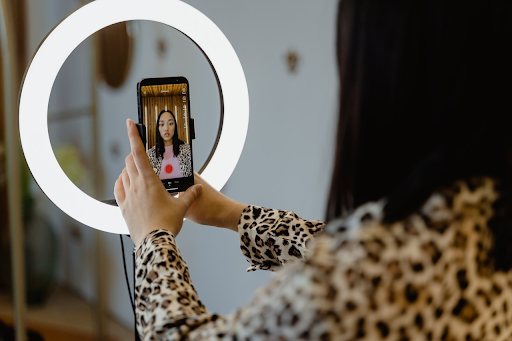
Image source: “Creative Ways to Collaborate with Other TikTok Creators and Boost Your Following.” AllBlogThings, 2 May 2023.
Marketing Machine – The Endless Cycle of Consumerism
Even trends meant to resist the consumer cycle, like the recent “de-influencing” movement, made matters worse. The internet’s rebellion against overconsumption ended up becoming another form of it. People began posting “better alternatives” instead of “overhyped” products, which ironically caused more consumption.
In other words, even resisting the algorithm feeds it. The internet found a way to turn self-control into a sales pitch because on TikTok, every opinion is monetizable.
This ongoing cycle captures how TikTok blurs that line between advertising and authenticity. Every video, ranging from get-ready-with-me’s, weekly recipe inspiration, day in the life, a product review, even the “what not to buy” or “dupe” promotions, becomes an opportunity for engagement, and engagement equals profit. The algorithm doesn’t care what you’re talking about, just that you’re talking. That’s what makes it such an amazing marketing tool: it turns consumers' attention into currency, it turns shopping into a game, and everyone’s trying to keep up.

Image source: Sameer. “The Science Behind Viral Growth on TikTok: Trends, Timing & Engagement.” TycoonStory, 24 July 2025, updated 10 Nov. 2025.
Hot for a Week, Broke for a Month – Psychology of Micro-Trends & Impulse Buying
Micro-trends, which are driven on TikTok, are essentially hijacking our wallets at an outstanding speed. Each time we open the app, there are carousels or short-form videos of hyper-targeted product recommendations, leveraging FOMO so we feel like we must hop on the trend. It’s smart too, since according to TikTok’s own data, 83% of TikTok Shop users discover new products on every visit, and over half of American users admit to making impulse purchases inspired by their feeds. Gen Z is especially susceptible to these quick, emotionally-charged decisions that come from these short-form videos.
The power of micro-trends doesn’t come from how viral they get; it’s from how short they last. One day it’s trending and the next it disappears over the weekend. Yet, catering to the FOMO of a short-lived trend across all of Gen Z is driving up sales like no other. It’s what creates that rush, the fear of missing out instantly, to say you were a part of it. Everyone wants to join before the trend is over. Because of the speed at which trends “die off,” people end up buying things or products to feel included, not because they actually need them. As Leena Wong writes, “More and more clothing hauls took over my screen…but the sheer quantity of clothing in each haul reflects how easily people are swept into the cycle of buying and showing off what’s new” (Wong, The Collegian, 2024).
This new consumer behavior focuses on our reflex, not a reflection of who we are or what we need. Consumption becomes performative. TikTok has turned buying into belonging. When viral items fill everyone's For You page, like Stanley cups or mini-blenders, not having them can make you feel less than. People who post their “hauls,” or “unboxings,” show who they are through what they buy. Sharing those items online creates a blend of competition (who found this item first?), self-expression (This is so me), and validation (This item's trending and now I have it).
Ruvic, Dado. Photograph featured in “Murdoch, Ellison and China: What We Know About the US’s TikTok Deal.” The Guardian, 10 Nov. 2025
Self-expression for Sale – Added to My Cart or Added to My Identity.
Now, TikTok may sell a lot, but it also gives everyone the chance to create. Small businesses, new artists, and everyday users have the chance to turn their passions into paychecks. TikTok has programs like the TikTok Creator Fund and partnerships with brands. This allows creators to make a real income from what they post. This financial support helped many people transform a side hobby into a full-time profession. Many smaller brands have solely credited TikTok for keeping their brand alive and driving sales, proof that these short-form viral videos are doing what sometimes traditional advertising budgets can’t.
But now, there is a new kind of “self-made” pressure. What began as genuine self-expression can now become monetized content. Someone who’s posting a morning routine could double as a skincare ad, a vlog at a work shift could double as a coffee ad, or even a walk to class could double as a headphone ad. TikTok’s culture rewards those who can market personas, not just products.
The Final Sale
TikTok was simply developed to create content, and somehow it has completely rewritten the way we shop, think, and view ourselves. Each video, in between all the new dances, 9-5 vlogs, haul videos for foreign candy, we stopped asking if we needed something and started thinking about who we’d be without it.
It has become genius marketing that is disguised in authenticity, and we’re buying it every time. I’d say that is TikTok’s biggest new trick: it didn’t change what we buy, but why we buy it. We’re no longer just consumers; we’re seen as a personal brand. We have control over what personas to invest in. TikTok didn’t just rewire the way we respond to quick, Fomo - driven purchases; it taught us that every swipe, haul, and “add to cart” decision is an investment of who we think we are at the end of the day.
-Kelsey Klungel-