

The People Who Make or Break a Campaign
The importance of authentic celebrity endorsements.

Image courtesy of Women’s Wear Daily
Jeans never used to be this controversial. However, once you mention the name Sydney Sweeney, most minds go to the infamous American Eagle campaign and wince at the thought of it. However, Sweeney isn’t the first celebrity to have this effect on people, and she most certainly won’t be the last.
American Eagle’s “Sydney Sweeney Has Great Jeans” ad came out in July 2025, and people are still talking about it because of its incredibly tone deaf message and awkward delivery. Highlighting a blonde, blue-eyed, white woman and labeling her as the image of “great jeans” or “great genes” is not necessarily the message people want to hear right now.
So why did American Eagle choose Sweeney? Most would wonder if they even asked themselves this question. However, this simple inquiry is essential if brands choose to base their campaign around a celebrity. They have to make sure the celebrity fits what they are trying to sell and can connect with an audience. Let’s look at a time when this really worked.

Courtesy of Complex
One of the most iconic campaigns was the 1984 Air Jordan campaign, when Nike signed Michael Jordan to endorse their brand. At the time, Jordan was a rookie basketball player, and Nike scooped him up before any other brands could. This ended up being the best possible investment for their company. Nike earned $126 million in the first year, and the shoes continue to thrive today. Why did this work out? Because people wanted to feel like Jordan in their shoes: strong, fast, and authentic. Nike’s brand aligned perfectly with their celebrity partnership, and therefore, it was a huge financial and cultural success.
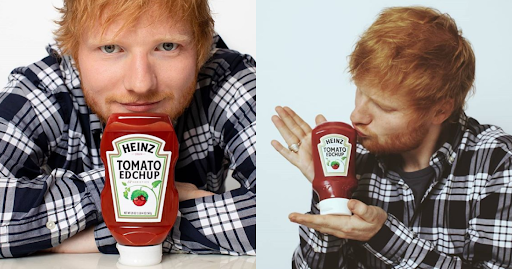
Photo Courtesy of Conaxess Trade
However, sometimes, the weirdest or most unexpected celebrity endorsements leave the longest-lasting impression. For example, in 2019, Heinz launched their famous campaign with Ed Sheeran. It all started in April when Sheeran posted on Instagram, “Yo @Heinz, I have an idea for a TV ad if you wanna do one, if not I won’t be offended, I could never be mad at you…have your people call my people. Lots of love, your biggest fan x.” Heinz then released a TV ad and a limited edition “Edchup” that helped raise money to support children's hospices and hunger relief efforts.
So even though most people wouldn’t pair Ed Sheeran with a condiment brand, this endorsement worked because Sheeran is a cherished public figure with good humor and authenticity. Heinz gave consumers an unexpected yet clever duo that worked for their company. This campaign was largely philanthropic and brand-building for Heinz, all due to the celebrity they picked.
So yes, it is fair to say that the people you choose to represent your brand hold all the power in how your brand looks. But not necessarily how it sells. Sydney Sweeney actually brought American Eagle’s stock up 25% and provided them with a 2% increase in revenue. All publicity can be good publicity, but this highly controversial campaign will be a part of American Eagle’s history forever.
Regardless, there should always be an extensive thought process behind each creative brief when the main focus is on a celebrity persona. Key questions for brands to consider include “Why this person? What will they communicate about our brand? Do our consumers connect with this person?” At the end of the day, it is important that brands choose their celebrity endorsers wisely, for the sake of the brand’s everlasting reputation.
-Gracie Glen-